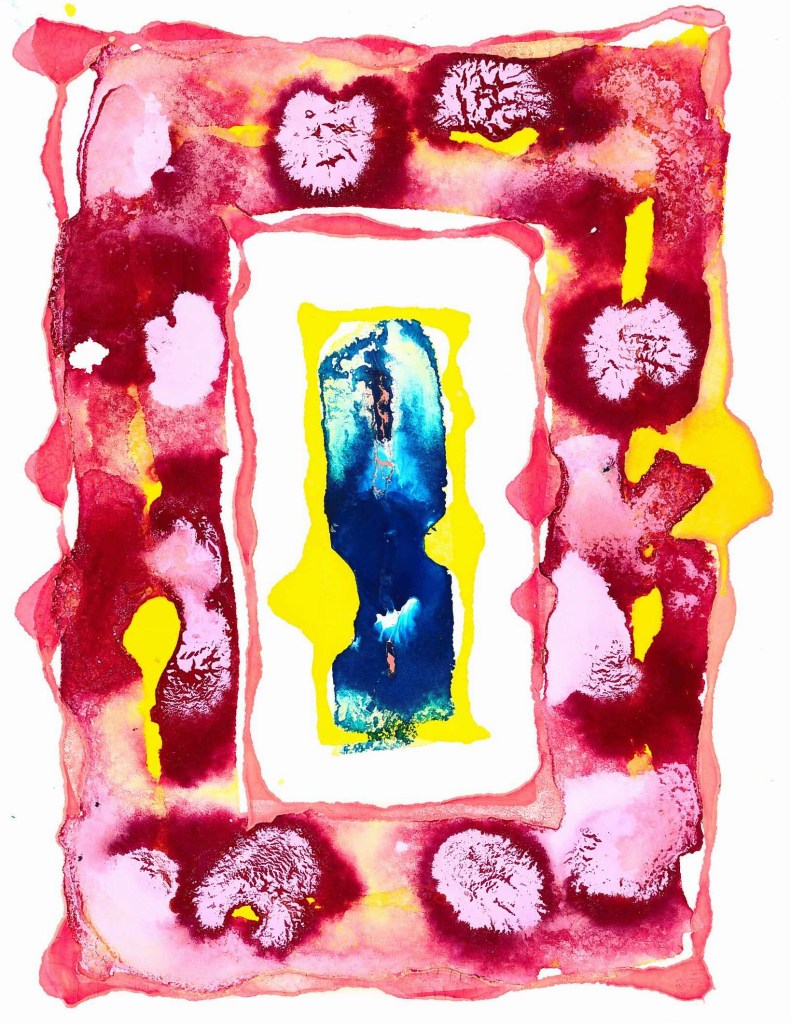
2025 September I Changed My Mind, This Is Now Glued and In the Paper Press For 72 Hours To the One Below That Was Going To Be Glued To the Dried Desk Mask
One thought on “2025 September I Changed My Mind, This Is Now Glued and In the Paper Press For 72 Hours To the One Below That Was Going To Be Glued To the Dried Desk Mask”
https://en.wikipedia.org/wiki/Art_for_art's_sake explained to me that my idea of the ancient origin of the MGM motto was erroneous – when questioned about truth for truth’s sake, an assertedly electrically efficient LLM built by people whose mother tongue was not English outputs this word sequence:
The pursuit of truth for its own sake is a philosophical and moral stance, one that posits inherent value in knowledge and reality, regardless of its utility. This is the domain of the pure scientist, the philosopher, and the artist, who seek to understand the universe and the human condition not to achieve a specific end, but because the act of uncovering what is constitutes a fundamental good. It operates on the principle that truth is sacred and that ignorance and falsehood are, in themselves, corrosive to the human spirit. In this framework, truth is an absolute; it is the destination, and the journey toward it is a form of integrity. To compromise it for comfort, power, or convenience is to betray a core tenet of intellectual and ethical life.
Conversely, treating “truth” as a tool subordinates its value to a desired outcome, making it instrumental rather than intrinsic. In this pragmatic view, a fact is not a sacred artifact but a lever to be pulled, a narrative to be shaped in service of persuasion, motivation, or control. A leader might simplify a complex truth to unite a population, a marketer might highlight favorable facts while obscuring others, or an individual might tell a “white lie” to spare a friend’s feelings. Here, the measure of a truth is not its fidelity to reality, but its effectiveness. The danger, of course, is that when truth becomes merely a means to an end, it can be easily bent, broken, or discarded altogether, risking a descent into a world where power, not reality, ultimately dictates what is “true.”

 pjoepf Of vriecyh
https://en.wikipedia.org/wiki/Art_for_art's_sake explained to me that my idea of the ancient origin of the MGM motto was erroneous – when questioned about truth for truth’s sake, an assertedly electrically efficient LLM built by people whose mother tongue was not English outputs this word sequence:
The pursuit of truth for its own sake is a philosophical and moral stance, one that posits inherent value in knowledge and reality, regardless of its utility. This is the domain of the pure scientist, the philosopher, and the artist, who seek to understand the universe and the human condition not to achieve a specific end, but because the act of uncovering what is constitutes a fundamental good. It operates on the principle that truth is sacred and that ignorance and falsehood are, in themselves, corrosive to the human spirit. In this framework, truth is an absolute; it is the destination, and the journey toward it is a form of integrity. To compromise it for comfort, power, or convenience is to betray a core tenet of intellectual and ethical life.
Conversely, treating “truth” as a tool subordinates its value to a desired outcome, making it instrumental rather than intrinsic. In this pragmatic view, a fact is not a sacred artifact but a lever to be pulled, a narrative to be shaped in service of persuasion, motivation, or control. A leader might simplify a complex truth to unite a population, a marketer might highlight favorable facts while obscuring others, or an individual might tell a “white lie” to spare a friend’s feelings. Here, the measure of a truth is not its fidelity to reality, but its effectiveness. The danger, of course, is that when truth becomes merely a means to an end, it can be easily bent, broken, or discarded altogether, risking a descent into a world where power, not reality, ultimately dictates what is “true.”
LikeLike